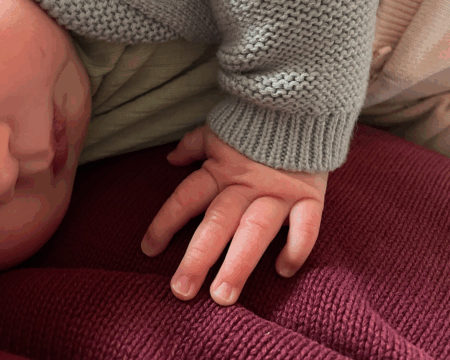

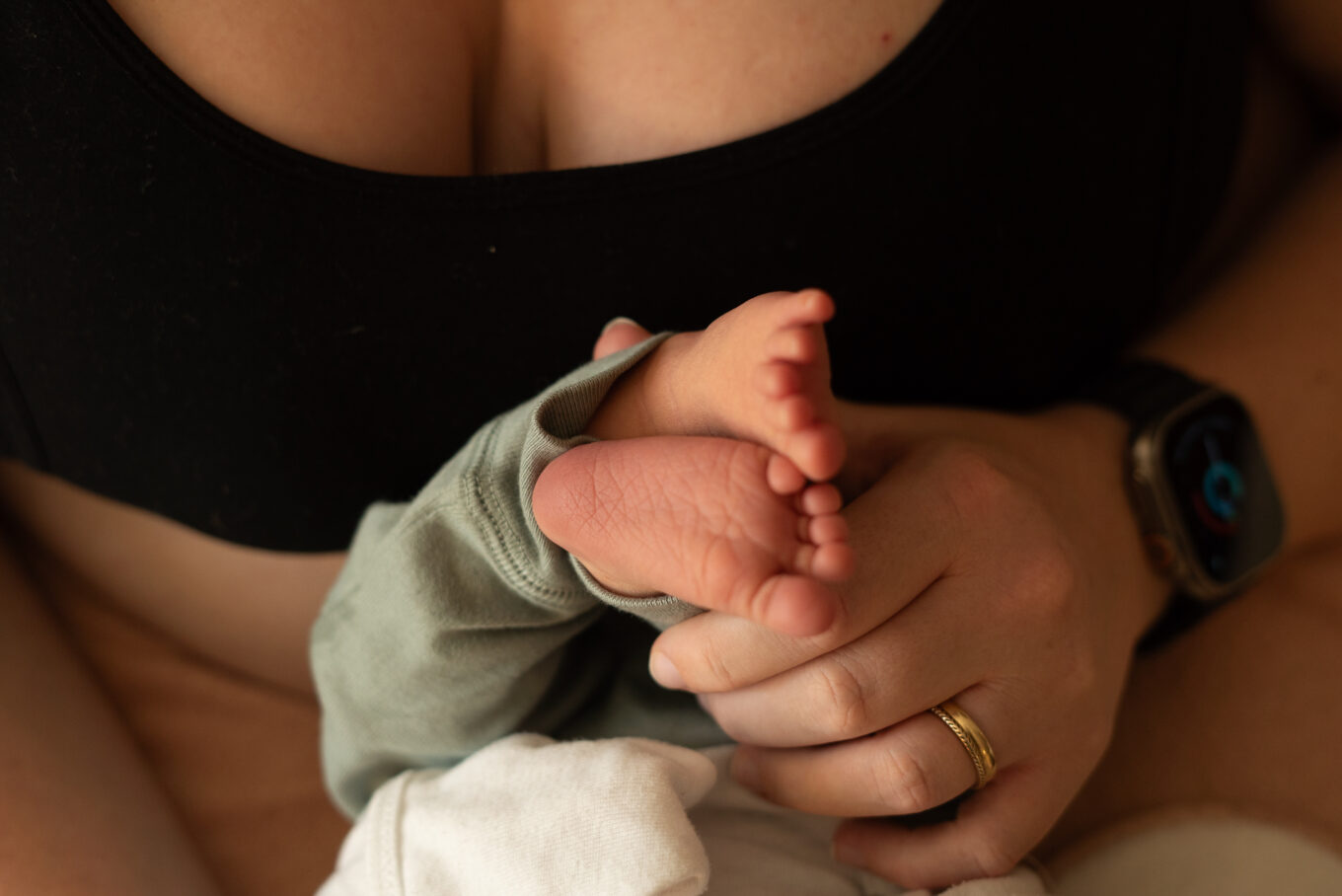
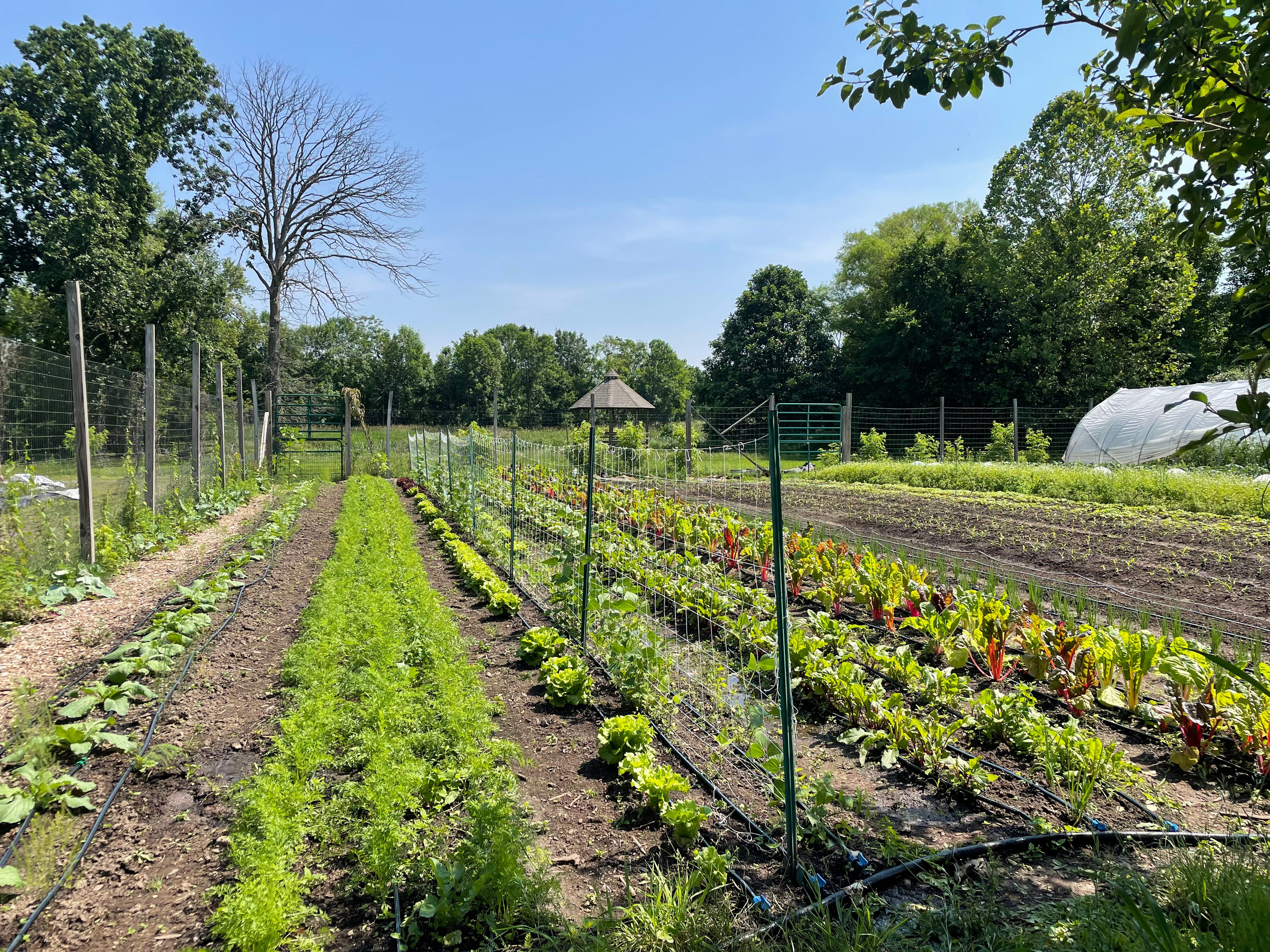
I’m taking a summer class right now, taught at a farm. Every day at 11:30, I get home wearing a thin coating of sweat and dirt to find my baby sitting on the sofa with my mom.
The second she sees me, her face lights up. I hoist her in the air and bring her to sit on my lap. She bounces and climbs, tugging at my hair and smushing her hands all over my cheeks. She isn’t able to give kisses yet, so instead she opens her mouth as wide as she can and plants it squarely on my nose or chin, as if to say, I missed you so much, I want to swallow you whole.
If you didn’t know better, you might think I just returned from war.
There’s a strange symbiosis to the early months of a baby’s life. The egg that grew into my daughter has been with me since before I was born; the first sound she ever knew was my heartbeat (or, less romantically, my digestion). She spent nine months inside me, then many more essentially attached to me through breastfeeding, babywearing, and skin to skin contact. During pregnancy, some of her cells crossed the plancenta and permanently became a part of my DNA.1 Some part of us is biologically interwoven, now and forever.
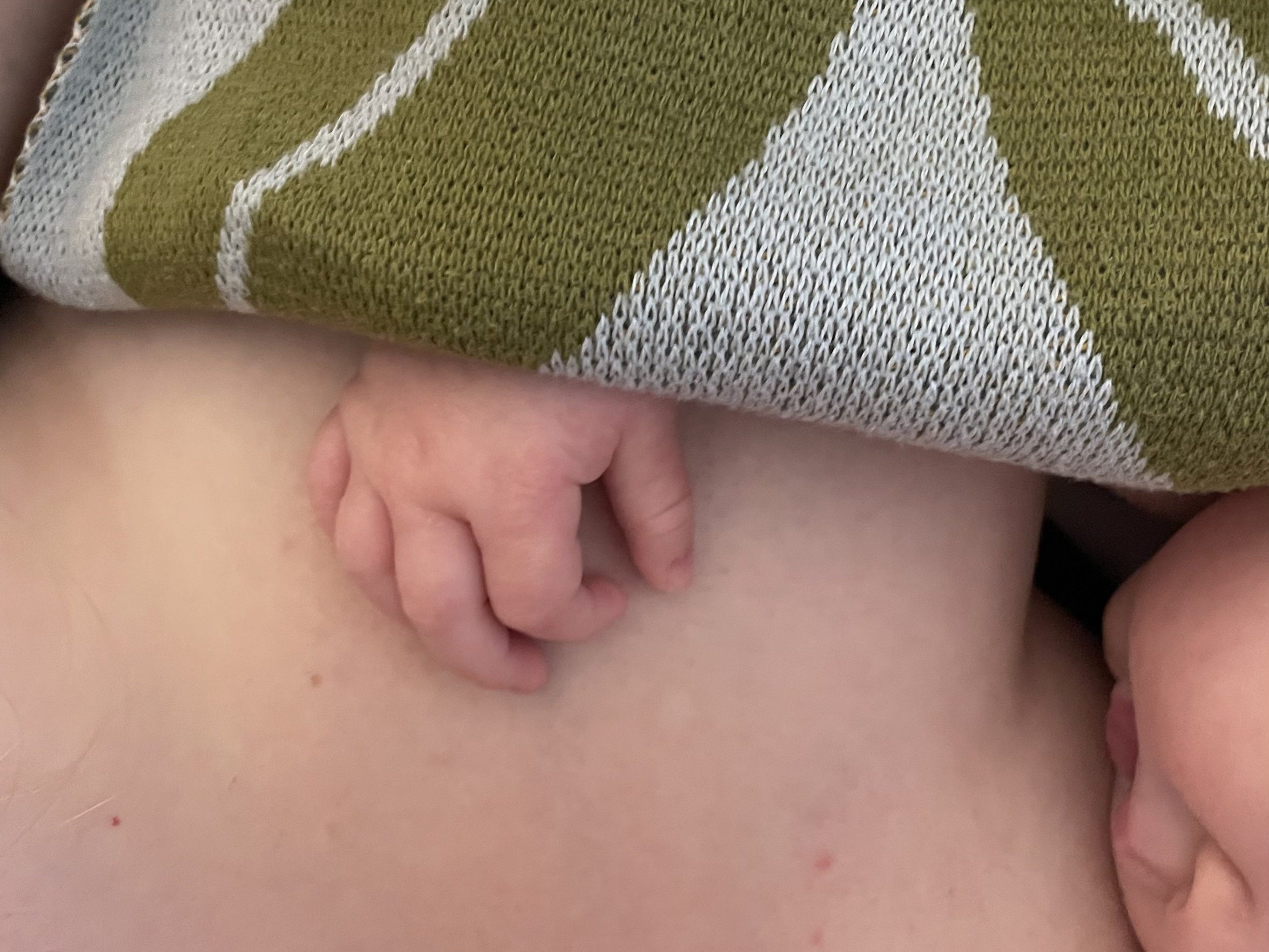
We’re two separate people—honoring and respecting my daughter’s individuity is important to me. But that’s largely because of my own conditioning and beliefs; to her—for whom every moment is all-consuming, and all time is immediate and happening all at once—we’re still mostly one oganism. I’m with her and I love and care for her, and so I’m also a part of her and her world.
Our biology paved the way for this smushy, blurry time in which we’re both two and one. Human babies are born much earlier than other animals; our large heads couldn’t make it through the pelvis if we waited much longer. We don’t reach the developmental age when most other mammals are born until we’re about 9 months old. In that way, we’re kind of like kangaroos, writes psychologist Laura Gutman: carrying our babies in-utero for months, and then extra-utero for a similar time.2
Some cultures honor this time of symbiosis, viewing the mother and baby as interwoven for months after birth. I’ve heard anthropologists try to communicate this time of blurred edges by blending the titles of mother and baby: the mother becomes “babymommy” and the baby becomes “mommybaby.”
I’m hesitant to lean too heavily on the smudging of those lines. Women are already so encouraged to lose ourselves in motherhood; to sacrifice our wants, dreams, and identities for the thriving of this little being. It’s important for us to remember that we are our own, and it’s important for our children to see us individual people.
And yet, there’s a gift in this smushy, blurry, amorphous time for us, too. It’s easy to think about how much love, labor, and energy we pour into our babies in those early days: waking every two hours to feed; fighting the urge to fall asleep while holding them in the middle of the night; using our bodies and breath to help regulate theirs. I only recently learned how much our babies help regulate us, in turn.
When we calm our babies down through co-regulation, they help us feel calmer, too.3 Our heart rates and breathing synch up4 and slow down.5 The rush of oxytocin we feel when we snuggle them helps reduce stress6 and calms the primal part of our brain.7 As they relax, so do we.
While all those feelings are immediate or moment-to-moment, there’s also a long-term shift happening that can help us feel more safe and connected. Our minds are more flexible and adaptive during pregnancy and postpartum than any time since we were babies.8 And as our babies’ brains wire towards feelings of safety, closeness, and connection, we have the opportunity to rewire our brains in the same way. Psychologist Helena Vissing writes that “the transition to parenthood holds a particular potential for transformative healing” because of this gift of co-regulation.9
While those early months are hard, they can be a time of mutual flourishing.
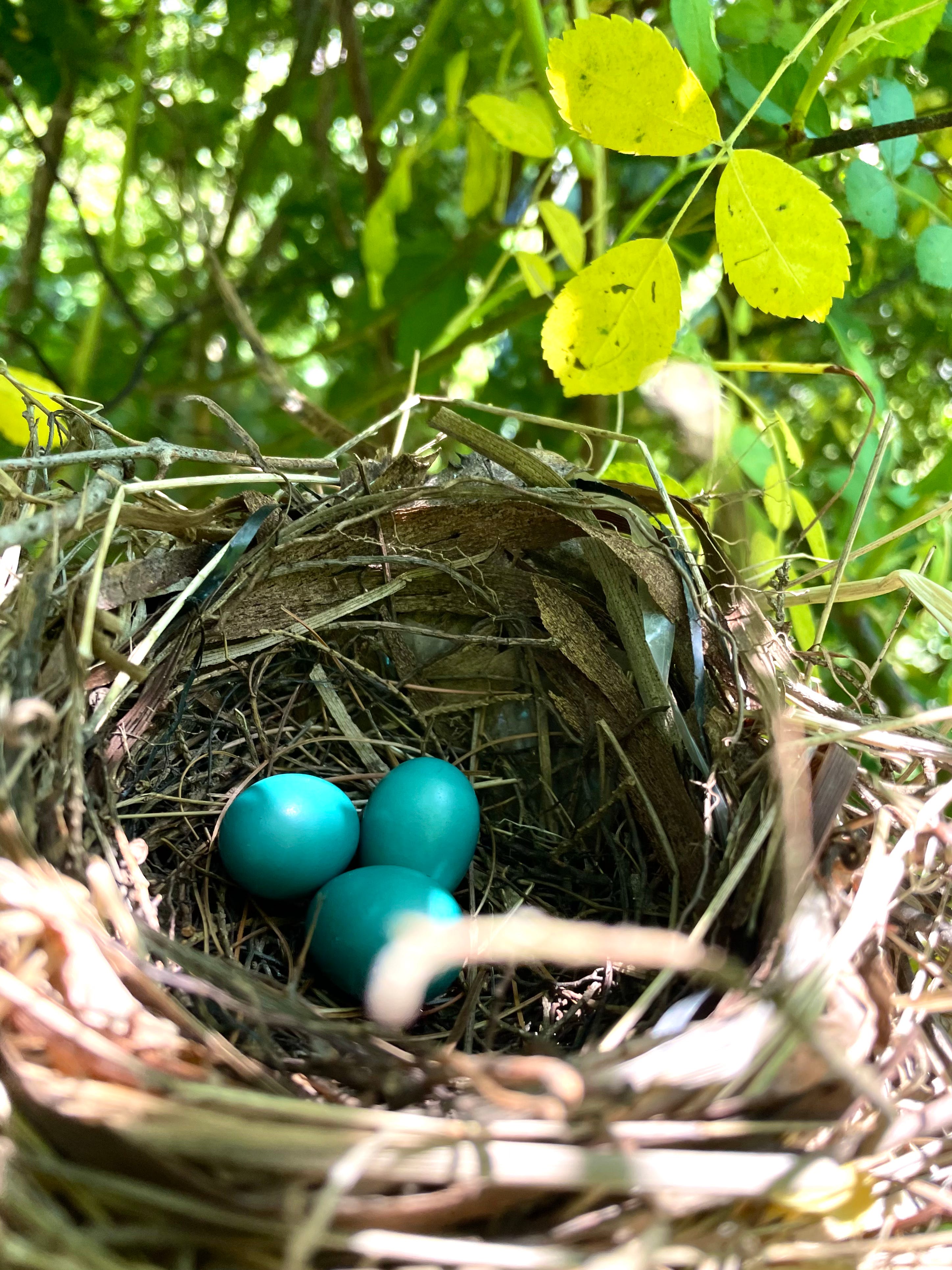
Robin Wall Kimmerer, a Native American author and botanist of the Potawatomi tribe, writes that “all flourishing is mutual.”10 Ever since I first heard that phrase, I can’t get it out of my head. I see it everywhere: in the chickens on our farm, who both eat and fertilize the grass. In the squash and corn we plant together, which nourish each other below the soil. In the sequoias who interlink their roots so they can all grow taller together.
In way my husband’s joy becomes mine becomes his becomes mine.
In this: the synching of my daughter’s breath and heart. The laughter as I pull her close and kiss her face. The slobbering of a little wet mouth on my cheek, craving nearness; welcoming me home.
- Hannah Thomasy, “A Stranger to Oneself: The Mystery of Fetal Microchimerism,” The Scientist, July 22, 2024. https://www.the-scientist.com/a-stranger-to-oneself-the-mystery-of-fetal-microchimerism-72022.
- Laura Gutman, Maternity: coming face to face with your own shadow, Crianza USA, 2008, 22.
- Helena Vissing, Somatic Maternal Healing: Psychodynamic and Somatic Trauma Treatment for Perinatal Mental Health, Routledge, 2024, 176-179.
- Ruth Feldman, “Biological and Social Rhythms: Implications for Autonomic Nervous System Synchrony in Parent–Child Interactions,” Infant Behavior and Development 34, no. 4 (2011): 571–578, https://ruthfeldmanlab.com/wp-content/uploads/2019/06/biological-and-social-rhythms.IBAD2011.pdf.
- Ayami Suga, Maki Uraguchi, Akiko Tange, Hiroki Ishikawa, Hideki Ohira, and others, “Cardiac Interaction between Mother and Infant: Enhancement of Heart Rate Variability,” Scientific Reports 9 (2019): Article 20019, https://doi.org/10.1038/s41598-019-56204-5.
- Elizabeth Q. Cox, Alison Stuebe, Brian Pearson, Kathleen Grewen, Diana Rubinow, and Samantha Meltzer-Brody, “Oxytocin and HPA Stress Axis Reactivity in Postpartum Women,” Psychoneuroendocrinology 55 (2015): 164–72, https://doi.org/10.1016/j.psyneuen.2015.02.009.
- Greer Kirshenbaum, The Nurture Revolution: Grow Your Baby’s Brain and Transform Their Mental Health through the Art of Nurtured Parenting. Balance, 2023, 62.
- Kirshenbaum 22.
- Vissing 1.
- Robin Wall Kimmerer, Braiding Sweetgrass, Milkweed Editions, 2015, 383–384.